
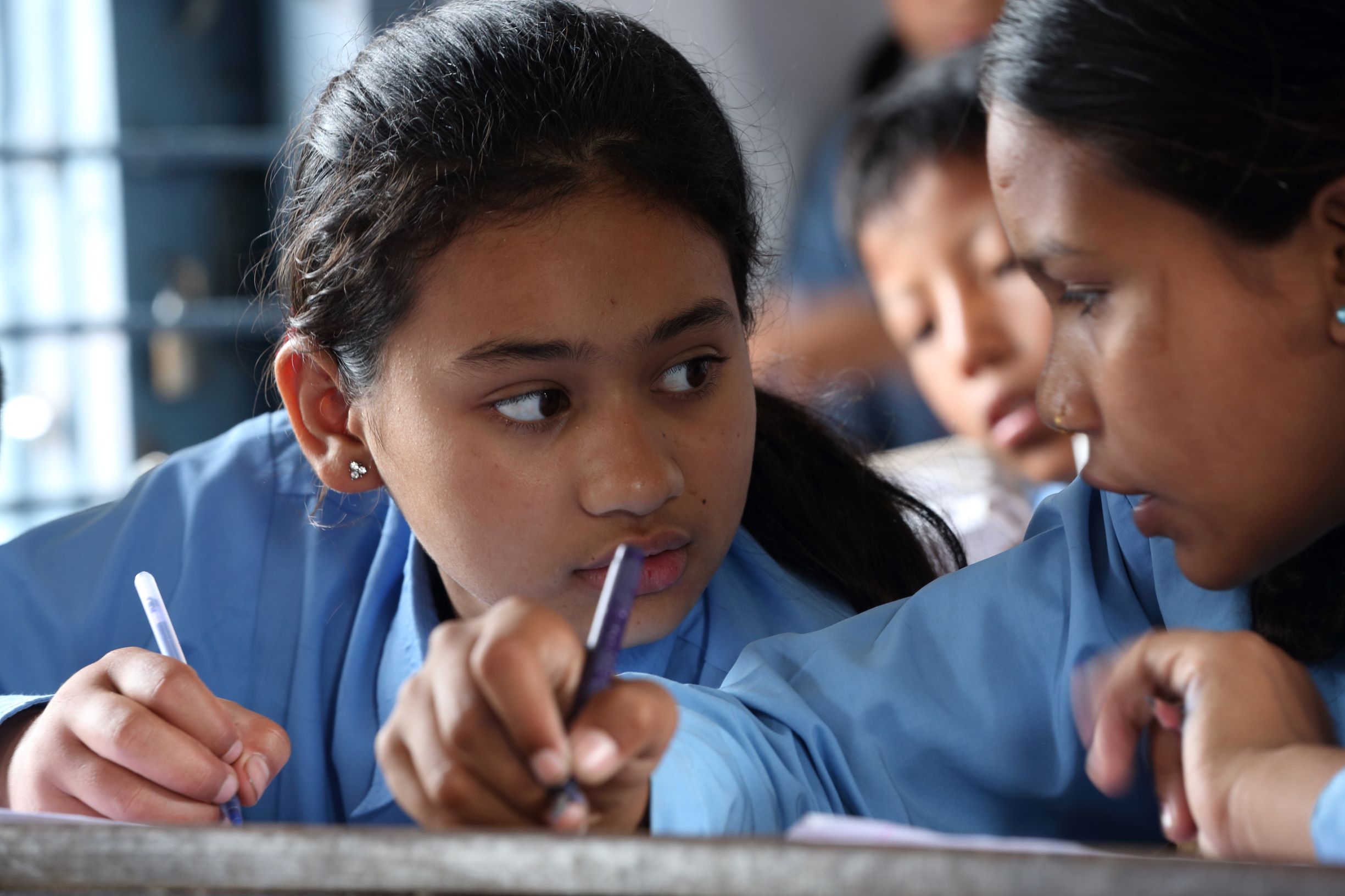
Intergenerational capabilities development in mothers and adolescent daughters in Nepal
publication
Intergenerational capabilities development in mothers and adolescent daughters in Nepal
20.11.2019 | Nepal
Country
Nepal
Capability domains
Bodily integrity and freedom from violence
Audience type
Policy maker or donor, Programme designer or implementer
Year of publication
2019
Intergenerational capability development refers to the changes in capabilities that are experienced across and between different generations of women and girls. In Nepal, the lives of younger women compared with older women have changed dramatically in recent years. For example, compared to women aged 35–39 years, women aged 20–24 years are less likely to have been married before age 18 (40% versus 57%), to have had children by age 18 (16% versus 25%), or to have no schooling (6% versus 54%). However, the younger cohort are only slightly more likely to hold a professional job (7% versus 5%) (Ministry of Health, 2017). This shows that the barriers facing women are at the level of society rather than the individual; overcoming those barriers will therefore require broader structural transformation.
Suggested citation
Jackson, E., Khan, Z. and Yount, K. M. (2019) 'Intergenerational capabilities development in mothers and adolescent daughters in Nepal.' Policy Note. London: Gender and Adolescence: Global Evidence. (https://www.gage.odi.org/publication/intergenerational-capabilities-development-in-mothers-and-adolescent-daughters-in-nepal/)