
GAGE at Women Deliver 2026: from evidence to action for adolescent girls
11.05.2026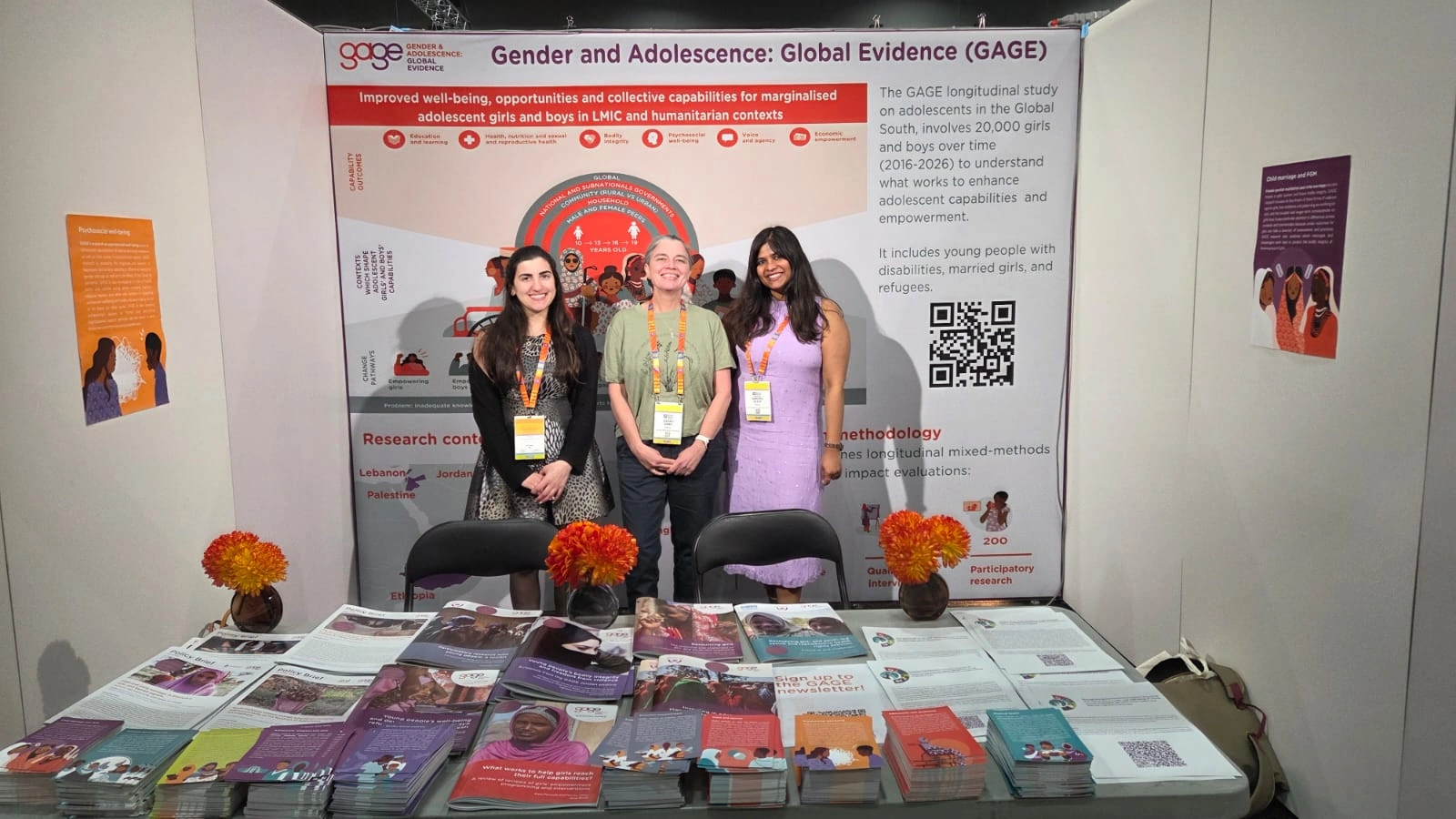
Authors: Sally Youssef, Christine Khuri and Shruthi Dileep
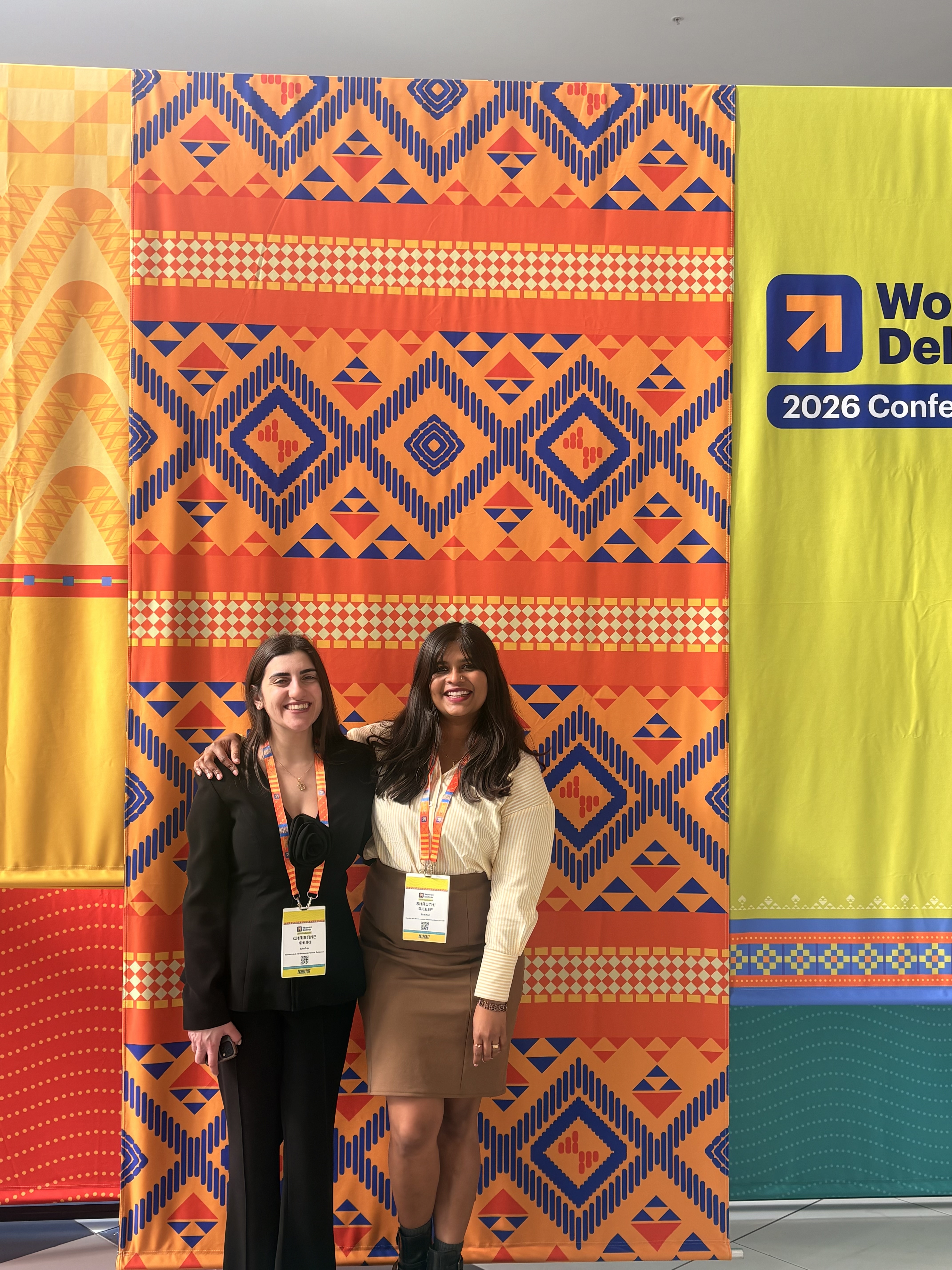
In April 2026, Gender and Adolescence: Global Evidence (GAGE) joined global partners, advocates, and adolescent leaders at the Women Deliver Conference in Melbourne (26–30 April), contributing over a decade of longitudinal research to critical global conversations on gender equality and adolescent well-being.
At a time when progress on girls’ rights remains uneven- and in some cases under threat- this convening marked more than a moment of reflection. It was a call to action.
Central to this momentum is The Adolescent Girls Era Campaign – a global, intergenerational movement running through 2030, grounded in the demands of adolescent girls themselves. Emerging from the Girls Deliver community, the campaign brings together over 70 organisations, youth advocates, and partners committed to ensuring that adolescent girls are not only visible but recognised as leaders, decision-makers, and rights-holders.
Despite longstanding global commitments – too many promises to adolescent girls remain unmet. Persistent gaps in funding, limited political prioritisation, and entrenched social norms continue to constrain girls’ access to education, health, bodily autonomy, and voice. At the same time, shrinking civic space and reductions in global funding threaten to reverse hard-won gains.
The Adolescent Girls Era responds to this urgency by calling for concrete progress across four key priorities: accountability, political recognition, adequate investment, and meaningful engagement of girls.
As part of this effort, GAGE has played a leading technical role in developing one of the campaign’s core tools: the Adolescent Girls Ecosystem Mapping, led by Sally Youssef (GAGE Senior Researcher and Qualitative Research Manager in Lebanon). Designed as a ‘living’ resource and hosted on GAGE’s website, the mapping provides a shared, global view of stakeholders working with and for adolescent girls across these four priority areas.
By making visible the breadth and diversity of actors– from civil society organisations and UN agencies to youth-led groups and funders– the tool aims to strengthen coordination, identify gaps, and support more strategic, collective action. At its core, it is about shifting from fragmented efforts to a more connected ecosystem– one that can better deliver for adolescent girls.
Building on this foundation, GAGE contributed to the Girls Deliver Pre-Conference by bringing together multiple strands of its work– including the Adolescent Girls Ecosystem Mapping and recent research on financing for adolescent girls– to inform discussions on accountability, investment, and coordinated action.
At the Girls Deliver Pre-Conference Opening Session, GAGE introduced the Adolescent Girls Ecosystem Mapping as part of a joint Adolescent Girls Era Campaign briefing alongside Women Deliver and the Adolescent Girls Investment Plan (AGIP). While the session showcased a suite of tools designed to strengthen accountability and coordination– including AGIP’s Commitment Mapping for Adolescent Girls– GAGE’s contribution, presented by Shruthi Dileep, Qualitative Research Coordinator at GAGE, focused on demonstrating how the mapping can be used in practice to better understand and connect the global ecosystem of organisations and actors working with and for adolescent girls. The discussion highlighted the value of the mapping as a tool to identify partnerships, surface gaps, and support more coordinated, evidence-informed action to advance adolescent girls’ empowerment and well-being.
Beyond the opening session, GAGE actively contributed to the Girls Deliver Pre-Conference concurrent strategy sessions, bringing evidence and practical tools into more focused discussions on accountability and financing for adolescent girls.
In the Collective Action for Girl-Centred Accountability strategy session, GAGE further built on the ecosystem mapping to explore how it can strengthen accountability for adolescent girls. Presented by Christine Khuri, GAGE’s Publications Coordinator, the session highlighted how accountability is not held by a single actor, but shaped by the interactions between a diverse set of stakeholders– from youth-led organisations and advocacy groups to researchers, funders, and policymakers. Drawing on insights from the mapping, GAGE demonstrated how making these roles and relationships more visible can help shift accountability from fragmented and implicit to more coordinated and transparent. The discussion emphasised the value of the tool in identifying accountability partners, surfacing gaps in follow-through, and strengthening collective efforts to ensure that commitments to adolescent girls translate into action. Discussions during the breakout sessions also highlighted the importance of ensuring greater visibility of marginalised groups– including adolescents with disabilities and girls in remote communities– and reflected strong interest in adapting the mapping approach across different regional and linguistic contexts.
In a second concurrent strategy session– Funding the Adolescent Girls Ecosystem– GAGE co-organised the session alongside UNICEF and Our Collective Practice (OCP), and contributed to setting the scene for a conversation on how funding can better support adolescent girls. Presented by Shruthi Dileep, Qualitative Research Coordinator at GAGE, this segment drew on GAGE’s research, including Resourcing girls: The potential and challenges of girl- and youth-led organising and Investing in adolescent girls: Key changes in the bilateral donor funding landscape, to provide participants—including adolescent girls themselves — with a clearer understanding of how resources currently flow across the ecosystem. GAGE’s contribution highlighted a critical paradox: while overall funding for adolescent girls has increased in recent years, their share of global aid is declining, and only a very small proportion reaches girl- and youth-led initiatives. The discussion also underscored how funding remains fragmented and often inaccessible, particularly for the most marginalised groups, and is increasingly under pressure due to shrinking global aid budgets. By unpacking these trends and mapping how funding moves between donors, intermediaries, and implementing actors, the session aimed to equip participants with the evidence needed to better understand where gaps persist — and what needs to change to ensure that commitments to adolescent girls are matched by sustained, equitable investment.
Beyond the Girls Deliver Pre-Conference, GAGE also contributed to the Women Deliver Conference Concurrent Sessions. These included Building Cross-Movement Solidarity for a Global Commitment for Adolescent Girls and Healthy Women, Thriving World: Why Investing in Women’s Health Drives Gender Equality and Economic Progress, both featuring Professor Sarah Baird, GAGE Impact Evaluation Lead, as a panel contributor. Across these discussions, GAGE drew on its longitudinal evidence base to highlight the critical importance of adolescence as a key window for strengthening health, well-being, and empowerment, with impacts that extend across the life course and into future generations. The sessions also underscored the value of longitudinal mixed-methods research programmes such as GAGE in generating evidence across diverse contexts — including humanitarian settings — to inform more effective, cross-sectoral policy and programming for adolescent girls and women.
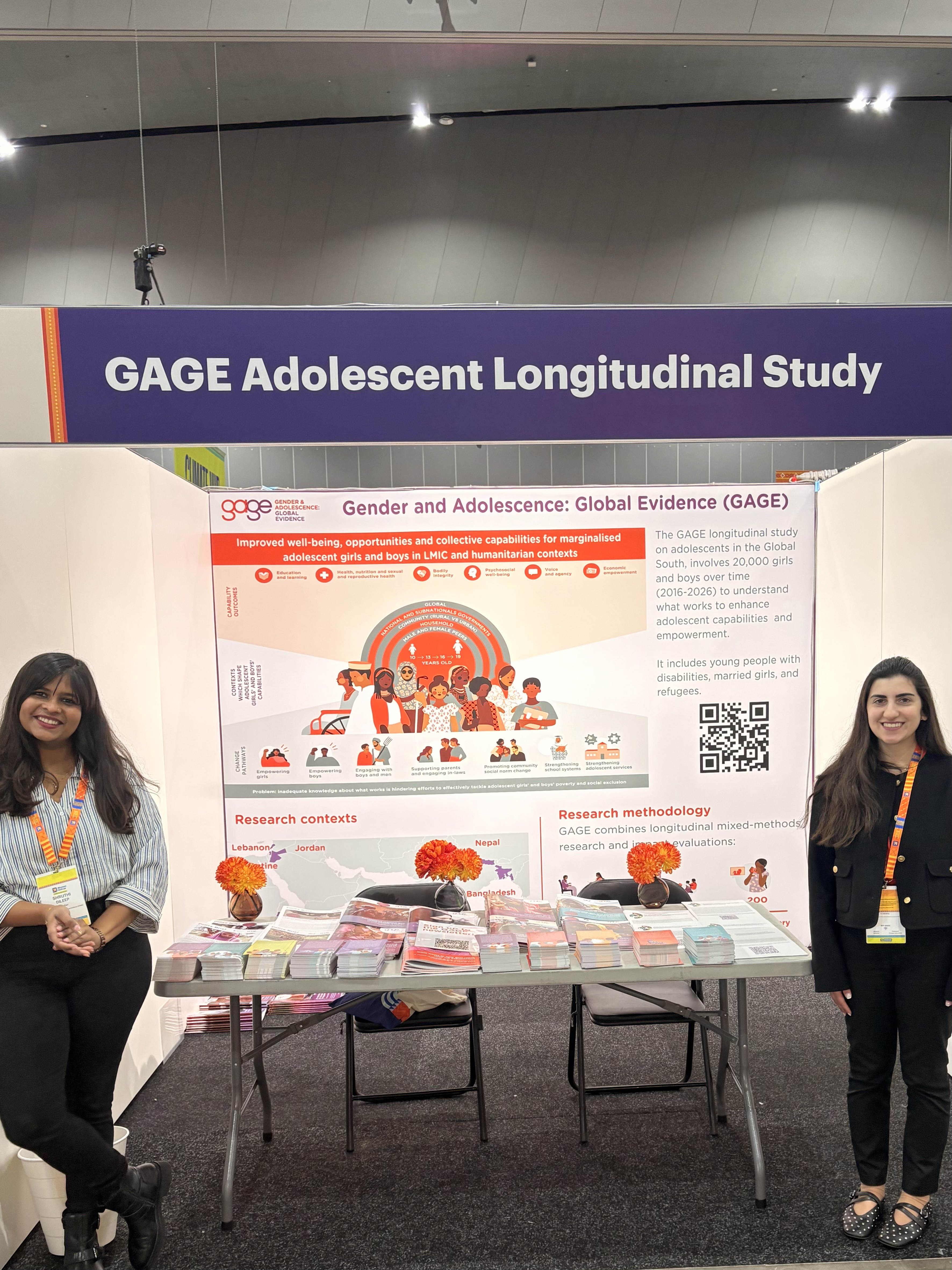
Finally, at the Women Deliver Conference, GAGE hosted an exhibition booth that became a space for connection, exchange, and curiosity. During the exhibition, we shared a range of GAGE resources and publications on adolescent wellbeing, voice, and agency – sparking conversations with participants from across regions and sectors. There was strong interest not only in our research, but also in the Adolescent Girls Ecosystem Mapping, with many attendees eager to explore the tool and express interest in being included. Discussions at the booth also reflected growing interest in expanding collaboration and learning across additional regional and linguistic contexts, including West Africa, Latin America, and Francophone settings. These exchanges highlighted a broader demand for longitudinal, mixed-methods, and participatory research on adolescents, as well as for stronger evidence bases that can inform policy, programming, and collective action for adolescent girls across diverse contexts. These interactions reinforced the value of making evidence accessible and visible, and of creating spaces where diverse actors can connect, learn, and collaborate. As the conference came to a close, it was clear that beyond the sessions and discussions, it is these moments of exchange that help build the relationships and momentum needed to sustain and scale collective action for adolescent girls.
Bringing together diverse actors – from researchers and policymakers to funders, practitioners, and adolescent girls themselves – the Women Deliver Conference underscored the importance of collective spaces for advancing shared priorities. The conference also reinforced the need to place adolescent girls and young women more centrally within policy, programming, and investment agendas, rather than treating their needs and priorities as secondary considerations. At a time when progress remains uneven and resources are under pressure, such convenings play a critical role in aligning efforts, strengthening partnerships, and sustaining momentum. For GAGE, these exchanges reinforced the value of connecting evidence with action – and of working collaboratively across the ecosystem to deliver meaningful change for adolescent girls.
Details