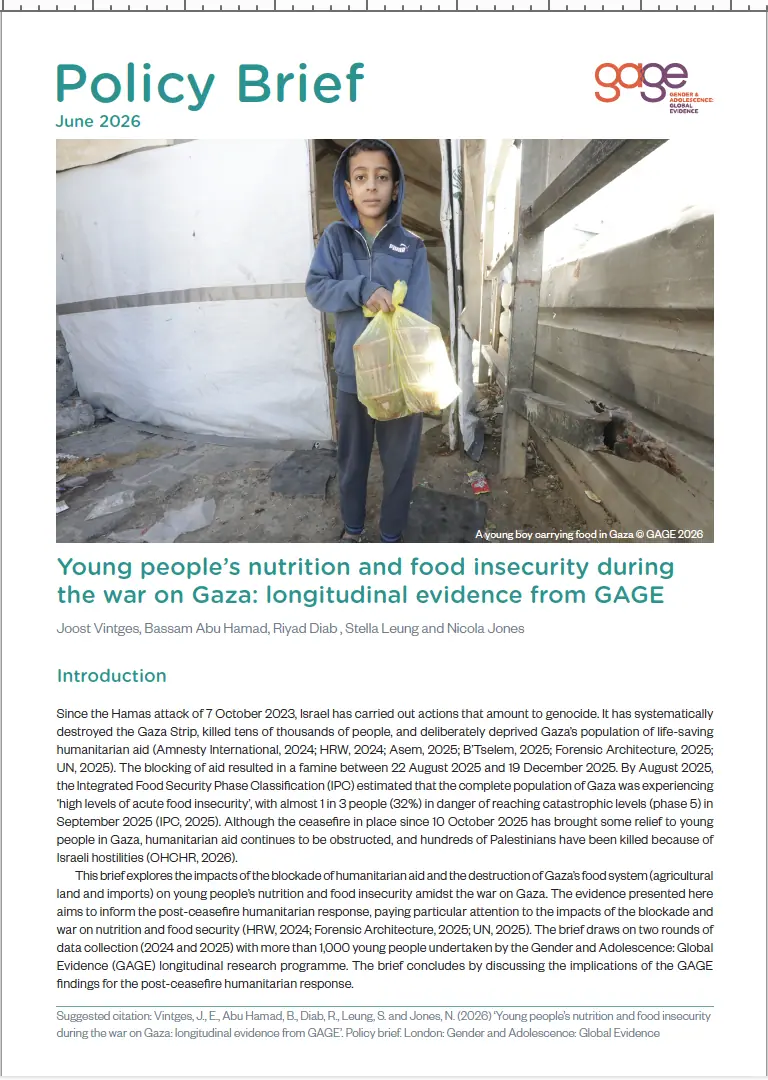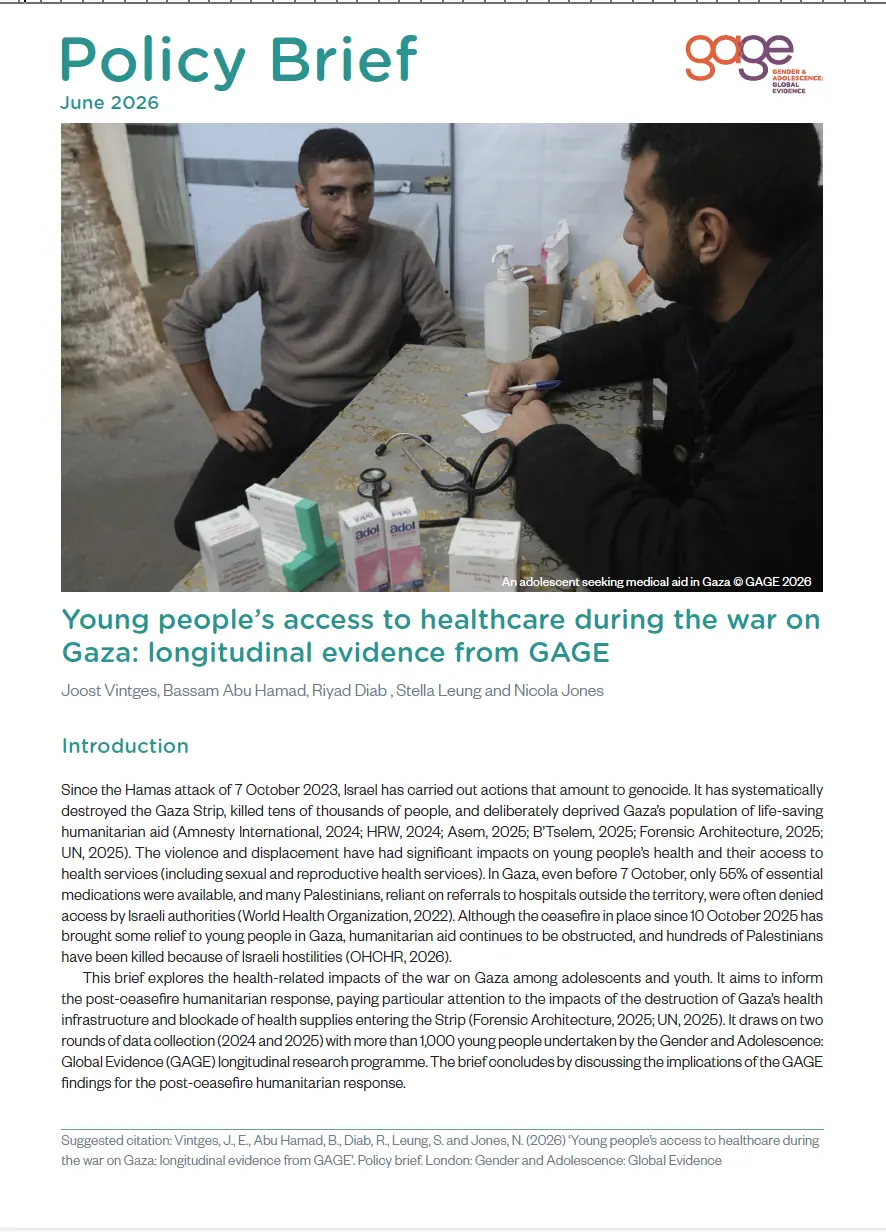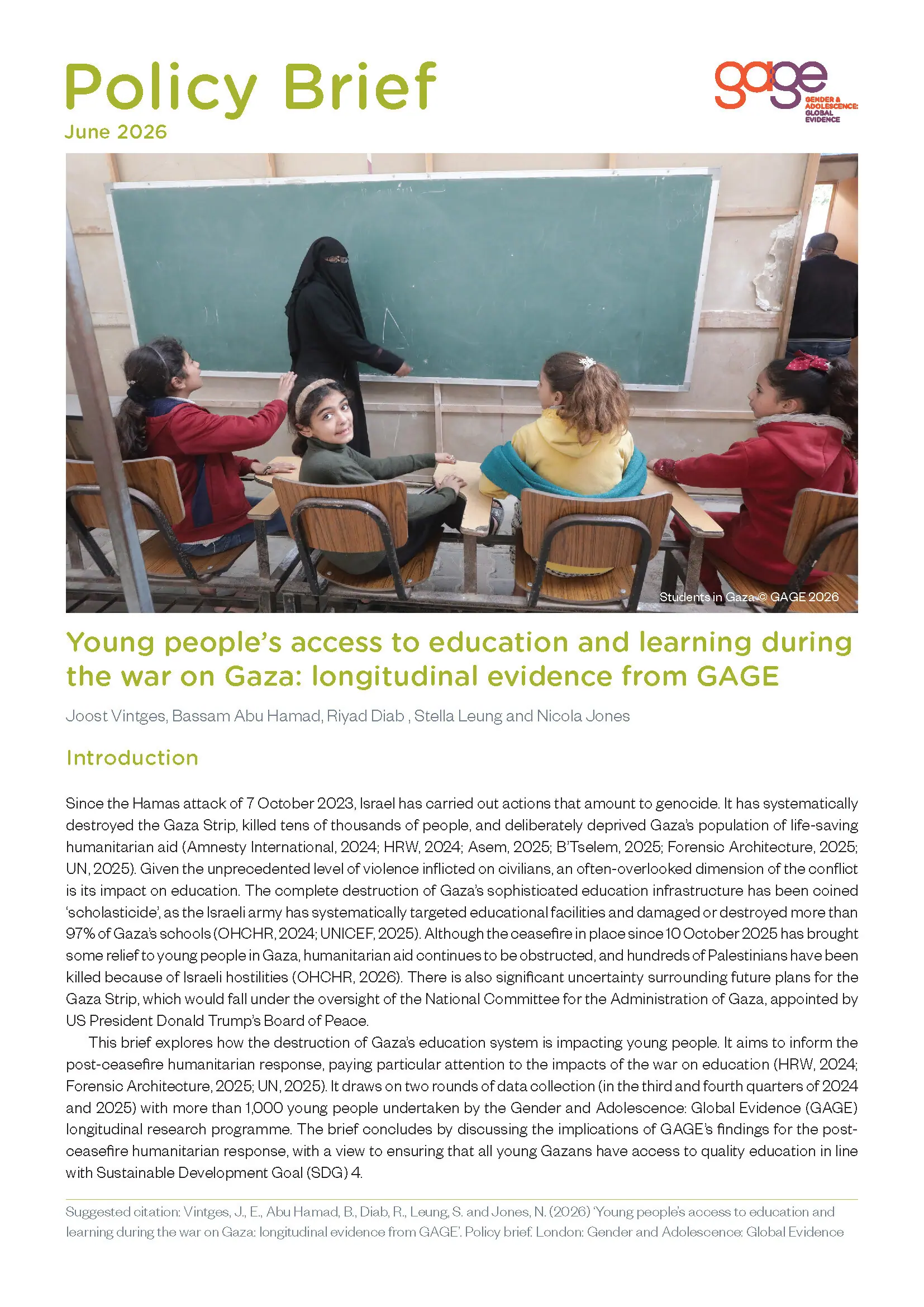
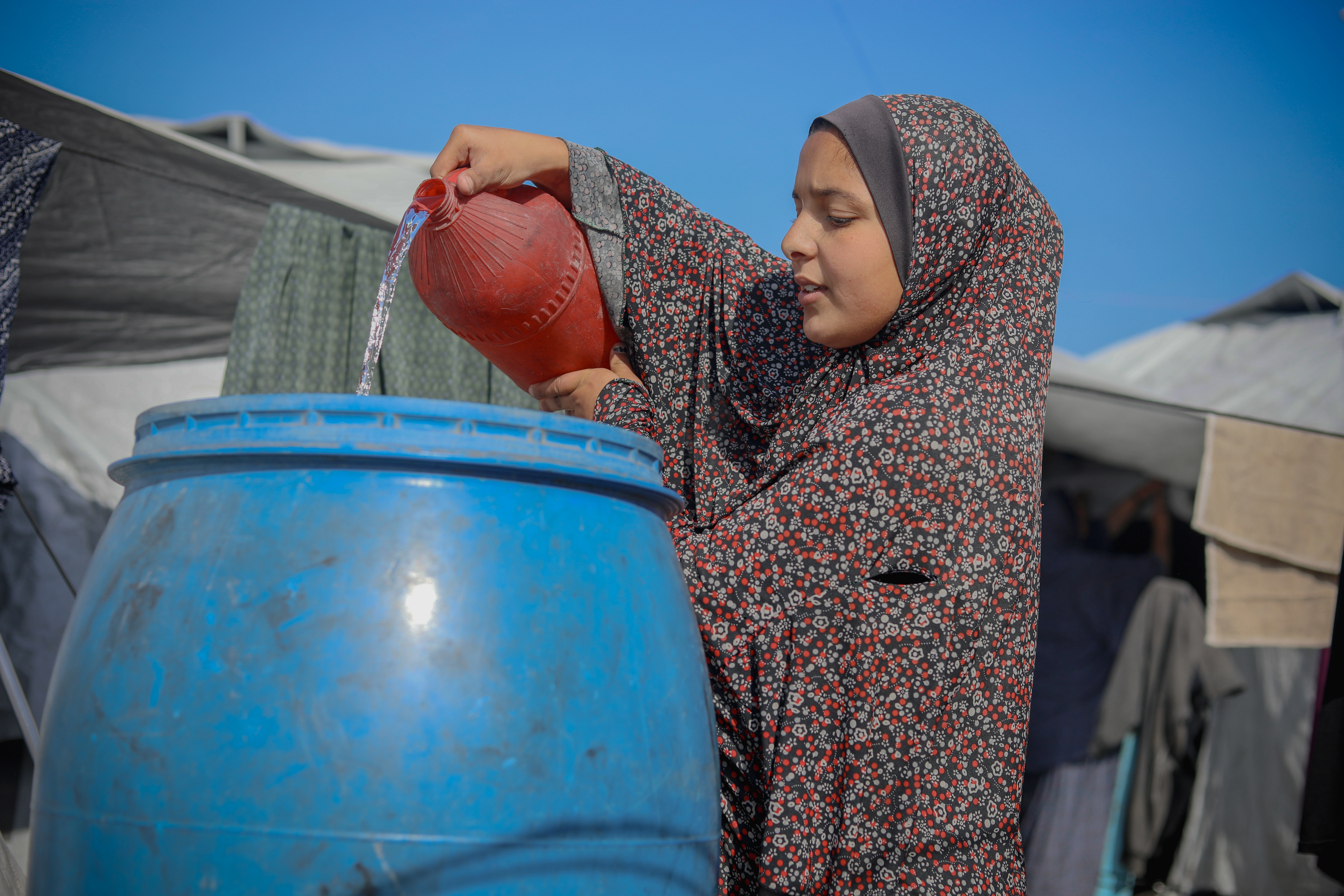
Young people’s access to water, sanitation and hygiene (WASH) during the war on Gaza: longitudinal evidence from GAGE
publication
Young people’s access to water, sanitation and hygiene (WASH) during the war on Gaza: longitudinal evidence from GAGE
17.06.2026 | Palestine
Country
Palestine
Capability domains
Health, Nutrition and Sexual and Reproductive Health (SRH)
Audience type
Policy maker or donor, Programme designer or implementer, Researcher
Year of publication
2026
Study methodology
Longitudinal



Since the Hamas attack of 7 October 2023, Israel has carried out actions that amount to genocide. It has systematically destroyed the Gaza Strip, killed tens of thousands of people, and deliberately deprived Gaza’s population of life-saving humanitarian aid (Amnesty International, 2024; Asem, 2025; B’Tselem, 2025; Forensic Architecture, 2025; HRW, 2024; UN, 2025). Given the unprecedented level of violence and suffering, an often-overlooked dimension of the conflict is its impact on age- and gender-based violence risks, including within households and communities. The ‘ceasefire in place since October 10, 2025, brought some relief to young people in Gaza; however, humanitarian aid continues to be obstructed, and hundreds of Palestinians have been killed because of continued Israeli hostilities (OHCHR, 2026).
Suggested citation
Vintges, J., E., Abu Hamad, B., Diab, R., Leung, S. and Jones, N. (2026) ‘Young people’s access to water, sanitation and hygiene (WASH) during the war on Gaza: longitudinal evidence from GAGE’. Policy brief. London: Gender and Adolescence: Global Evidence (https://gage.odi.org/young-people-s-access-to-water-sanitation-and-hygiene-wash-during-the-war-on-gaza-longitudinal-evidence-from-gage/)